


Quartz vs. Quartzite Countertops: What’s Better for Texas Homes?
Quartz and quartzite may sound like two versions of the same countertop, but they are very different materials. One is engineered for consistency and easy upkeep. The other is natural stone, with movement, veining, and variation that make every slab unique.
For Texas homeowners comparing quartz vs. quartzite countertops, the better choice usually comes down to how the kitchen is used, how much maintenance feels realistic, and what role the countertop should play in the overall design.
If you are remodeling a kitchen in Conroe, Magnolia, The Woodlands, or the surrounding North Houston area, understanding those differences before you fall in love with a color or slab can make the decision much easier.
Quartz vs. Quartzite Countertops: What’s the Difference?
The simplest distinction is this: quartz is an engineered countertop material, while quartzite is natural stone. That one difference influences appearance, maintenance, heat tolerance, consistency, and even how you shop for the material.
Quartz: An engineered surface made with natural quartz, resins, and pigments. It offers controlled color and pattern, a nonporous surface, and typically does not require sealing.
Quartzite: A natural stone formed from sandstone under intense heat and pressure. Every slab is different, and the material generally requires sealing and more attentive care.
Neither is automatically the better countertop. Quartz gives you predictability and convenience. Quartzite gives you the character and depth of a material created by nature.
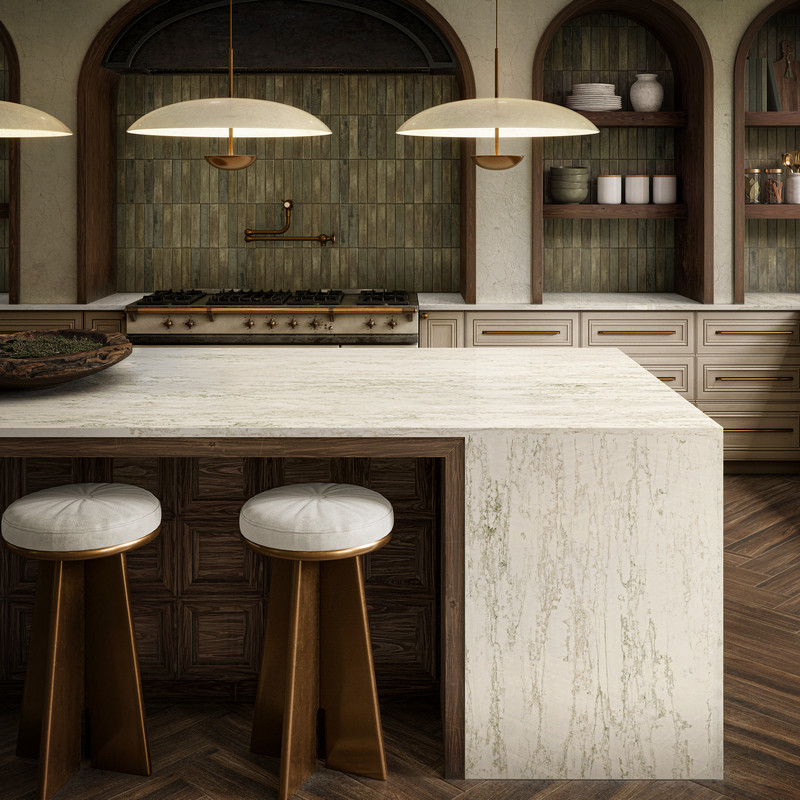
Why Quartz Works So Well in Busy Texas Kitchens
There is a reason quartz has become such a practical choice for kitchens that are genuinely used every day. It asks relatively little of the homeowner while still offering a polished, high-end look.
- Lower maintenance: Because quartz is nonporous, it typically does not need periodic sealing and is resistant to everyday staining.
- More predictable design: The pattern and color are engineered, so it is easier to know what the finished countertop will look like across a large island or perimeter.
- Broad style range: Quartz can be quiet and understated or feature dramatic veining inspired by marble and other natural stones.
- Easy coordination: Consistent undertones make it easier to coordinate the countertop with cabinetry, flooring, backsplash tile, hardware, and paint.
That last point matters more than many homeowners expect. A countertop rarely stands alone. In an open Texas kitchen, it may sit directly beside wood flooring, painted cabinetry, tile, and adjacent living-room finishes. Quartz gives a designer more control over how all of those elements relate to one another.
For a family that wants a beautiful kitchen without adding another surface to a maintenance schedule, quartz is difficult to overlook.
Why Quartzite Is Worth a Closer Look
Quartzite appeals to homeowners who want the countertop itself to bring something distinctive to the room. Instead of choosing a manufactured pattern, you are choosing an individual piece of stone.
- Every slab is unique: Veining, mineral deposits, color shifts, and movement vary naturally from slab to slab.
- It can become the focal point: A dramatic quartzite slab can turn a large kitchen island into the visual centerpiece of the room.
- Natural depth is hard to reproduce: Engineered products can imitate stone beautifully, but real quartzite has layers and variation created naturally.
- Excellent hardness and heat resistance: Quartzite is a strong natural stone and can perform very well in an active kitchen when properly cared for.
The tradeoff is maintenance. Quartzite is porous and generally needs to be sealed. Natural variation also means the slab you select matters; a small sample cannot reliably represent the movement across an entire piece of stone.
For some homeowners, that unpredictability is exactly the appeal. If you see a quartzite slab and immediately begin designing the rest of the kitchen around it, a little additional care may feel like a very reasonable compromise.
The Texas Kitchen Factor: Light, Layout and Everyday Living
The way many kitchens are designed in Conroe, Magnolia, and The Woodlands makes countertop selection especially important. Open floor plans, oversized islands, high ceilings, and generous windows mean the countertop can become one of the largest uninterrupted design surfaces in the room.
Strong natural light also exposes undertones. A white quartz that looks crisp under showroom lighting may read warmer or cooler next to your cabinetry at home. Quartzite can change even more dramatically as sunlight reveals mineral variation and layers of color throughout the slab.
Before making a final selection, consider the countertop in relation to:
- The direction and amount of natural light in the kitchen
- Cabinet color and undertones
- Existing or planned flooring
- Backsplash tile and wall color
- The size of the island and how much countertop will be visible at once
This is where an experienced countertop and design specialist can be valuable. The question is not simply whether a slab is beautiful. It is whether it is beautiful with everything else that will live beside it.
Which Countertops Work Best with Today’s Warmer Wood Floors?
As interiors move away from cool gray palettes, countertops are changing with them. Natural oak, honey, beige, and other warmer wood flooring tones create a softer foundation for the kitchen, and the countertop can either continue that warmth or intentionally contrast it.
- Quartz can create balance. Warm whites, creams, taupes, and softly veined patterns can complement wood grain without making the room feel visually busy.
- Quartzite can create a focal point. In a kitchen with quieter cabinetry and flooring, natural movement in the stone can provide the character the room needs.
A useful design rule is to decide which surface you want to lead. If the flooring has pronounced grain and the cabinetry already has plenty of character, a quieter countertop may give the room balance. If the surrounding finishes are restrained, a more expressive quartzite slab can take center stage.
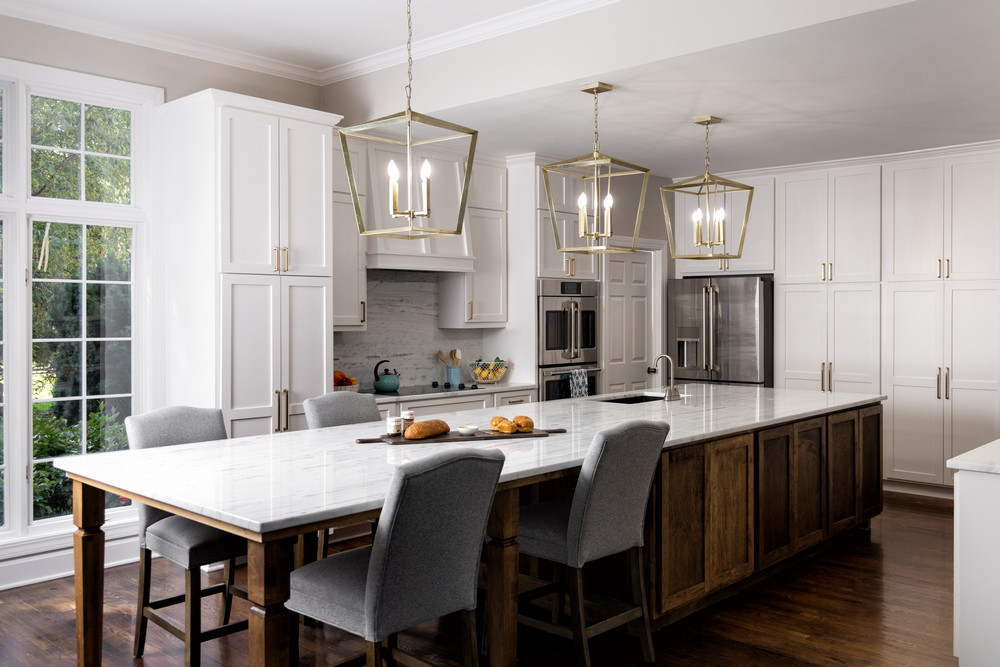
Quartz or Quartzite? Here’s the Simplest Way to Decide
After looking at dozens of samples and inspiration photos, the choice can start to feel more complicated than it needs to be. Bring the decision back to how you want the kitchen to function.
- Choose quartz if you want: low maintenance, consistent color and pattern, broad design flexibility, and an easy-to-live-with surface for a busy kitchen.
- Choose quartzite if you want: authentic natural stone, one-of-a-kind movement and veining, excellent hardness and heat resistance, and you are comfortable with periodic sealing.
Neither material wins every category. The right countertop is the one that matches both your design expectations and the way your household actually uses the kitchen.
Don’t Choose Your Countertop from a Tiny Sample
A small sample can tell you the general color. It cannot always tell you what the finished kitchen will feel like.
This is especially important with quartzite. A few inches of stone cannot capture the movement of an entire slab. One area may be quiet and subtle while another contains dramatic veining that becomes the focal point of the kitchen.
Even quartz should be viewed alongside the other finishes you are considering. Whites have undertones. Veining varies in scale. A countertop that looks perfect by itself can feel completely different beside your cabinet door and flooring sample.
Before committing, try to:
- View a full slab or the largest available sample whenever possible.
- Place countertop, cabinet, flooring, and backsplash samples together.
- Look at the materials in both natural and artificial light.
- Consider how the pattern will read across a large island, not just a small sample.
At Color Interiors, homeowners can compare countertops alongside flooring, cabinetry, tile, and other finishes rather than making each decision independently. Visit a showroom in Conroe, Magnolia, or The Woodlands to explore countertop options and work with a design specialist who can help bring the entire room together.
Frequently Asked Questions About Quartz vs. Quartzite Countertops
Is quartz or quartzite better for kitchen countertops?
Both are excellent kitchen countertop materials, but they suit different priorities. Quartz is generally the better fit for homeowners who value low maintenance and predictable design. Quartzite is often preferred by homeowners who want genuine natural stone, unique veining, and are comfortable with periodic maintenance.
Which is more expensive, quartz or quartzite?
There is no universal answer. Pricing for both materials can vary significantly based on the brand or slab, color, rarity, fabrication, countertop size, edge profile, installation requirements, and other project details. Compare the actual options you are considering rather than assuming one material will always cost more.
Does quartzite need to be sealed?
Quartzite is a natural, porous stone and generally requires sealing to help protect it from stains and moisture. The specific sealing schedule can vary by stone and sealer, so follow the care recommendations provided for the material you select.
Is quartzite more durable than quartz?
Both are highly durable, but in different ways. Natural quartzite is exceptionally hard and offers excellent heat resistance. Engineered quartz is durable, nonporous, and resistant to everyday staining, but its resin components can be damaged by high heat, so trivets or other heat protection should be used.
Which countertop is easier to maintain, quartz or quartzite?
Quartz is generally easier to maintain because its nonporous surface typically does not require sealing. Quartzite needs a little more attention, including periodic sealing, but many homeowners consider that worthwhile for the individuality and natural appearance of real stone.
See the Difference for Yourself
You can research quartz and quartzite for hours, but countertop decisions usually become much clearer once you see the materials at full scale and next to the other finishes in your kitchen.
Look at the veining. Feel the surface. Put the cabinet, flooring, backsplash, and countertop samples together. Most importantly, think about how you actually use the kitchen. The most beautiful countertop on its own is not necessarily the one that will work best in your home.
If you are considering new countertops for a home in Conroe, Magnolia, The Woodlands, or the surrounding North Houston area, visit Color Interiors to compare quartz, quartzite, and other countertop options in person. A knowledgeable design specialist can help you narrow the choices and find a surface that works with your home, your style, and everyday life.